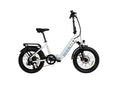
As electric vehicles take off—from scooters to cars—the e‑bike world is evolving too. Car manufacturers are branching into hybrids and electric models, while the e‑bike space now offers a range of motor systems and legal frameworks for riders to explore.
⚙️ Drive Systems: Hub vs. Mid‑Drive
-
Hub motors are built into the front, rear, or dual wheel, and operate independently from the bike’s gears. The motor applies fixed power regardless of your chosen gear.
-
Mid‑drive (centre‑drive) motors, popular across Europe, power the chain or belt—leveraging the bike’s gearing system for more efficient pedalling and climbing.
Both systems have their perks depending on terrain and personal preference.
📜 Navigating E‑Bike Laws Around the Globe
Governments are busy catching up with the rapid rise of e‑bike technology, aiming to strike a balance between innovation, rider freedom, and public safety.
Here’s what e‑bike regulations look like in various regions:
🇺🇸 United States – The 3‑Class System (Federal + State Laws)
Federal law (CPSC) defines a low-speed e‑bike as having:
-
Fully operable pedals
-
Motor power under 750 W
-
Motor-assisted speed capped at 20 mph (32 km/h)
Many states use this three‑class framework:
-
Class‑1: Pedal assist only, max 750 W, up to 20 mph. Allowed on bike paths and trails.
-
Class‑2: Pedal assist + throttle, same limits (20 mph, 750 W). Varies by state.
-
Class‑3: Pedal‑assist only, max speed 28 mph (45 km/h), still limited to 750 W. May be restricted to roads only and require helmet, registration, or license depending on the state.
While 750 W and speed caps are standard federally, note some states allow up to 1,000 W motors under local classifications.
🇳🇱 Netherlands – EU Standard Peddles & Speed Peddles
Under EU rules:
-
Standard peddles are limited to 250 W and assist stops at 25 km/h (15.5 mph). Treated as bicycles: no license, registration, or helmet required.
-
Speed peddles (up to 45 km/h) are classified as mopeds and require:
-
Helmet
-
Third-party insurance
-
Moped driving license
-
Registration plate
-
Use of moped or road lanes, not bicycle-only paths
-
🇳� Other Regions
-
New Zealand: E‑bikes up to 300 W need no license or registration. Over 300 W are classed as motor vehicles. Helmets are mandatory.
-
Australia: Limits to 250 W pedal-assist (no throttles above 200 W). Assist must stop at 25 km/h. More powerful bikes are considered motorbikes and need licensing.
🤔 Why It Matters
E‑bike power systems (hub vs mid‑drive) influence efficiency and ride feel, especially on hills or varied terrain. But understanding what’s legally allowed in your region is just as important.
Thinking of riding fast or upgrading power systems? Remember:
-
In the U.S., surpassing 750 W or speed limits may reclassify your e‑bike as a motor vehicle.
-
In the EU and Netherlands, staying under 250 W and 25 km/h keeps your e‑bike in the legal bicycle category.
-
High-speed models (500–800 W) may be common, but could fall under moped laws in public areas.
📨 Wrap-Up
E‑bikes are redefining personal transport—and laws are evolving to match. Whether you’re after a relaxed ride or high-speed commuting, it’s worth knowing what power, features, and usage are legal where you ride.
Pick the right system. Know your local laws. And enjoy the ride
Even while researching this blog I have found contradictions from several sources
namely Netherlands at 250W and USA at 750W class1